
Sanyang Beach is the reason most of our guests come to this part of The Gambia, and it is also the thing they get the most wrong before arriving. People picture either a resort strip with sunbeds in rows, or an empty desert island. It is neither. It is a working stretch of Atlantic coast next to a village, and understanding that in advance makes the difference between a good week and a slightly confused one.
This guide is what we tell guests over breakfast on their first morning.
Where Sanyang actually is
Sanyang lies in the Kombo South district of the West Coast Region, on the Atlantic side of The Gambia. It is south of the busier tourist area around Kololi and Senegambia, and north of Gunjur. Tanji, with its well-known fish market, sits between Sanyang and the airport.
From Banjul International Airport it is roughly 30 kilometres — call it 45 to 60 minutes by car, depending on traffic and how the road is holding up that month. That drive is the single thing most first-time visitors underestimate. It is not far in kilometres, but it is not a motorway either.
The village and the beach are two different places. The village sits inland from the shore; the beach is a wide, open strip that runs for kilometres in both directions. Between the two there is bush, palm, and a handful of tracks down to the sand.
The beach itself
The sand is pale and coarse, and the beach is wide — wide enough that at low tide you can walk with a hundred metres of open sand between you and the water. It runs long enough in both directions that you can walk for an hour and not reach the end of it.
This is the open Atlantic. That means surf, and it means a current. It is not a bay and it is not sheltered. On most days the water is fine and swimming is a pleasure; on some days the waves are noticeably bigger and the sensible thing is to stay in the shallows or skip it. There are no lifeguards anywhere on this coast, so your own judgement is the safety system. Swim where you can stand, keep an eye on the people around you, and do not go out alone at the end of the day when the light is going.
The water is warm enough to swim in year round. The temperature difference between January and September is real but small — it is never cold.
Fishing boats, and why they matter
Sanyang is a fishing village, and the beach is where that work happens. Brightly painted pirogues come in loaded, and the whole business of landing, sorting and carrying the catch takes place on the sand. It is loud, fast and worth watching.
Two practical things follow from this. First, there are stretches of beach that are working areas rather than lounging areas — you will know them when you see them, and it is polite to walk past rather than settle down in the middle of them. Second, if you want to see the boats come in, ask locally on the day. The timing follows the sea, not a schedule.
Eating and drinking on the beach
There are small beach bars along the shore, mostly simple, mostly serving grilled fish, rice dishes and cold drinks. They are family-run and they open and close with the season and the weather. Some are open every day in high season and shuttered in September.
Two things to know. Cash is safer than card — assume you will need small notes. And food is cooked to order rather than kept ready, so a meal takes as long as a meal actually takes. That is a feature, not a delay.
Getting around
Most of our guests do not rent a car, and most of them do not need one. Between the lodge and the beach it is a walk. For anything further, a taxi is the normal solution, and the normal thing is to agree the price before you get in rather than after you arrive. Prices are not fixed by meter and they move over time, so ask us or Malik at the lodge what the going rate is that week — you will be told the local price rather than the price a stranger gets quoted.
Shared minibuses run the main road and are cheap and useful once you have the hang of them, but they are not fast, and they are not the thing to rely on when you have a flight to catch.
For the airport run, we arrange transfers. It removes the one journey you really do not want to improvise.
Safety, honestly
Sanyang is a calm place, and the most common problems visitors have are the boring ones: too much sun, an ambitious swim, or a misunderstanding about a price. Violent crime is not the issue here.
What you will meet is conversation. Young men on the beach will approach you, introduce themselves, and want to talk — sometimes because they are friendly, sometimes because they hope it leads somewhere: a guided walk, a bracelet, an arrangement. It is not threatening, but it is persistent enough that some visitors find it tiring on their first days. A friendly, clear "no thank you" works, and it works better than being vague to avoid seeming rude. Being vague is read as "maybe", and "maybe" means the conversation continues tomorrow.
Do not carry more than you need to the beach. Leave your passport at the lodge. And take the sun more seriously than the breeze suggests you need to.
For health and vaccination questions, do not take advice from a lodge owner or from a travel blog — including this one. Check the current guidance from your own national health service before you travel; in the Netherlands that means the GGD travel advice and the travel advice from the Ministry of Foreign Affairs.
The quietest and busiest months
The dry season runs from November to May: sunshine, low humidity, temperatures generally in the mid-twenties to low thirties. That is high season, and the beach has the most people on it — which here still means it feels empty by European standards.
June to October is the green season. It is warmer and more humid, there are rain showers, and the landscape changes completely: everything that was dust turns green. Fewer visitors, lower prices in general, and a beach you will often have to yourself. The trade-off is that some beach bars close, and a heavy shower can take out an afternoon.
If you want the beach at its quietest with reliably dry weather, aim for the shoulder: late November, or May.
What Sanyang is not
It is not a resort beach. There is no strip of hotels, no rows of matching sunbeds, no beach club with a DJ. If that is the holiday you want, Kololi is forty minutes away and does it well.
What Sanyang gives you instead is space, a working village that got on with its life long before tourism arrived, and the kind of quiet you actually notice. Most people who come here once come back.
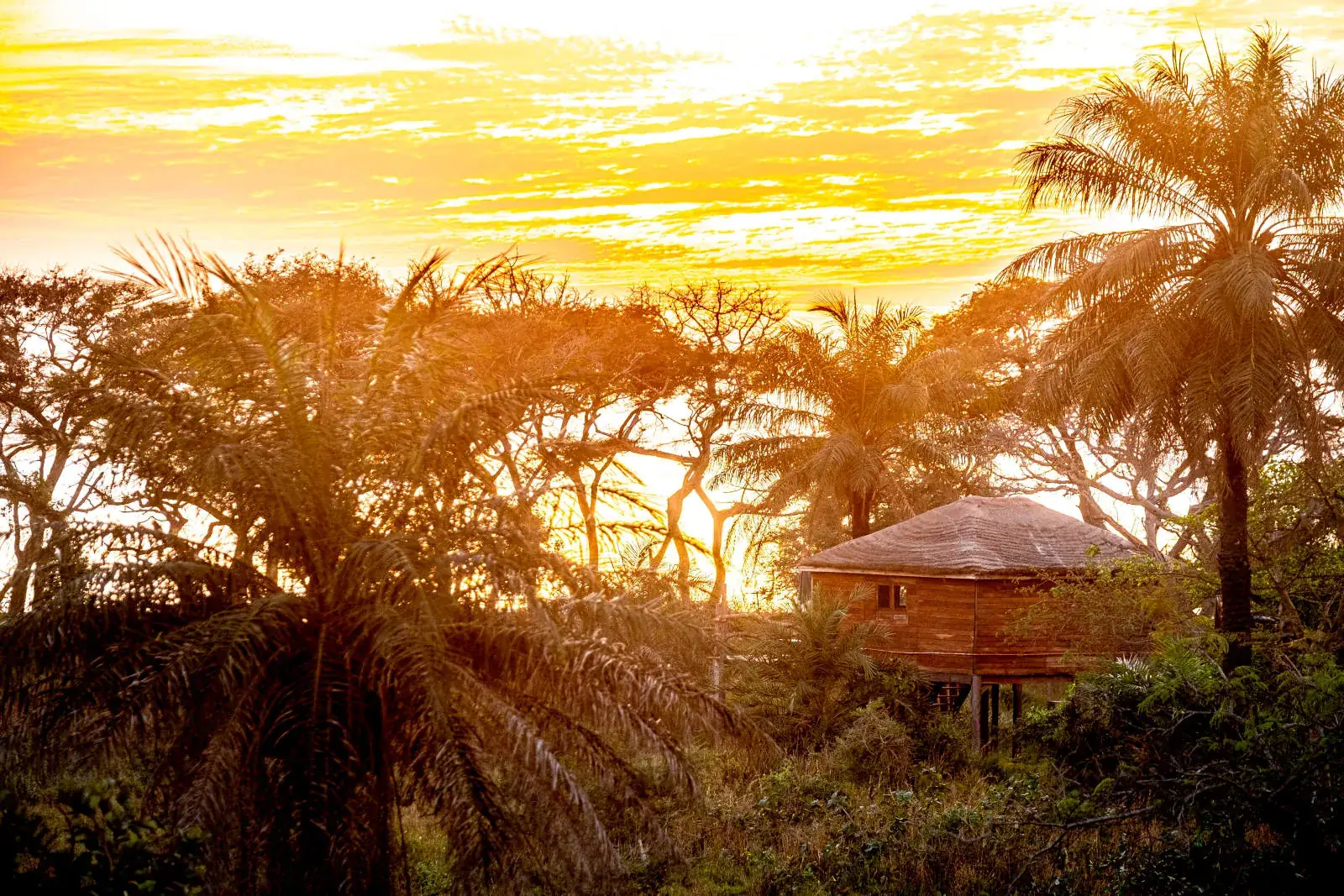
If you are thinking about staying on this stretch of coast, our studios, apartments and treehouses are a short walk from the sand.